


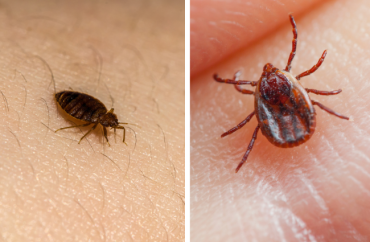
If you’ve found a small, blood-feeding pest in your home or on your body, you might be wondering whether you’re dealing with a tick or a bed bug. While both of these parasites feed on blood and can cause discomfort, they are actually quite different in terms of their biology, behavior, and the risks they pose. Understanding these differences is crucial for proper identification and determining the most effective approach to eliminate them from your home.
What are ticks?
Ticks are arachnids related to spiders and mites, not insects. These external parasites survive exclusively on the blood of mammals, birds, and sometimes reptiles and amphibians. Unlike many pests, ticks don’t infest homes in the traditional sense—they’re primarily outdoor pests that attach to hosts passing by in tall grass, wooded areas, or brush.
Once a tick finds a suitable host, it uses specialized mouthparts to embed itself in the skin, where it can feed for several days before dropping off. Ticks are particularly concerning because they’re vectors for numerous serious diseases, including Lyme disease, Rocky Mountain spotted fever, and ehrlichiosis. There are hundreds of tick species worldwide, with the deer tick, dog tick, and lone star tick being common in the United States.
What are bed bugs?
Bed bugs are small, nocturnal insects that belong to the Cimicidae family. Unlike ticks, bed bugs are true insects with six legs. These parasites feed exclusively on the blood of warm-blooded animals, with humans being their preferred host. They don’t live on their hosts but instead hide in cracks and crevices near areas where people sleep, emerging at night to feed while their hosts are asleep.
A bed bug feeding session typically lasts 5-10 minutes, after which they return to their hiding spots. They’re expert hitchhikers, spreading by latching onto luggage, clothing, and used furniture. Bed bugs don’t transmit diseases like ticks do, but their bites can cause itchy welts, and infestations can lead to psychological distress, sleep problems, and social stigma for affected households.
What do ticks look like?
Ticks have a distinctive appearance that sets them apart from other parasites. Unfed ticks are flat, oval-shaped, and typically measure between 1-5mm in length depending on their life stage and species. Their bodies consist of a fused head and thorax (called the cephalothorax) and an abdomen. As arachnids, adult ticks have eight legs, while the larval stage has only six legs.
Their color varies by species but commonly ranges from reddish-brown to black, sometimes with distinctive markings on their backs. After feeding, ticks undergo a dramatic transformation—their bodies swell and can expand several times their original size, taking on a grayish-blue or greenish appearance as they fill with blood. Their tough exoskeleton and lack of wings are other distinguishing characteristics.
What do bed bugs look like?
Bed bugs have a distinctive appearance that makes them relatively easy to identify once spotted. Adult bed bugs are oval-shaped, flat, and about the size of an apple seed (4-5mm long) when unfed. Their bodies are mahogany to rusty brown in color, becoming more reddish after feeding, with six legs and two antennae. Unlike ticks, bed bugs are insects and never have eight legs at any life stage.
They lack wings but are surprisingly fast movers. Immature bed bugs (nymphs) look similar to adults but are smaller and lighter in color, appearing nearly translucent before feeding. After consuming a blood meal, bed bugs transform dramatically, with their bodies swelling and elongating into a more cigar-like shape as they turn a deep red color from the blood they’ve consumed.
What are some main differences between ticks and bed bugs?
Ticks and bed bugs differ significantly in several key ways. Ticks are arachnids with eight legs as adults, while bed bugs are insects with six legs throughout their lifecycle. Their habitat preferences are also distinct—ticks live primarily outdoors in wooded areas, tall grass, and brush, while bed bugs thrive indoors near sleeping areas.
Feeding behavior varies too: ticks attach to hosts for extended periods (hours to days) and increase dramatically in size while feeding, whereas bed bugs feed quickly (5-10 minutes) and immediately retreat to hiding spots. Perhaps most importantly, ticks pose a serious health risk as vectors for numerous diseases like Lyme disease and Rocky Mountain spotted fever, while bed bugs, though psychologically distressing, don’t transmit diseases to humans. Their lifecycle and control methods also differ significantly.
What are more dangerous: ticks and bed bugs?
When comparing the health risks posed by ticks and bed bugs, ticks are objectively more dangerous to human health. Ticks are known vectors for numerous serious diseases, including Lyme disease, Rocky Mountain spotted fever, babesiosis, anaplasmosis, and ehrlichiosis, some of which can be life-threatening if left untreated. A single tick bite can transmit these pathogens, potentially leading to long-term health complications.
Bed bugs, despite their psychological impact and the discomfort they cause, are not known to transmit diseases to humans. Their bites typically result in itchy welts that resolve within a week, though some individuals may experience allergic reactions or secondary infections from scratching. While bed bug infestations can cause significant stress, sleep disturbances, and financial burden, they don’t pose the same direct health threats that tick-borne illnesses do.
Lifecycle of a tick
Ticks undergo a four-stage lifecycle: egg, six-legged larva, eight-legged nymph, and adult. Female ticks can lay thousands of eggs at once, typically in protected ground locations during spring. When these eggs hatch, the resulting larvae must find a host for their first blood meal—usually small mammals or birds.
After feeding, larvae drop off and molt into nymphs. These nymphs, about the size of a poppy seed, become dormant during winter before seeking a second host the following spring. Once fed, nymphs drop off and molt into adults. Adult ticks seek larger hosts like deer or humans for their final feeding and mating. After mating, females feed one last time before dropping off to lay eggs and die, completing the cycle. This process typically takes 2-3 years, though some species complete their lifecycle in a single year.
Lifecycle of a bed bug
Bed bugs go through a three-stage lifecycle: egg, nymph, and adult, with the entire process taking about 6-8 weeks under ideal conditions. Female bed bugs lay tiny, pearl-white eggs (about 1mm long) in clusters of 10-50, typically in cracks and crevices near feeding areas. These eggs hatch in 6-10 days, producing nymphs that are similar to adults but smaller and lighter in color.
Nymphs go through five molting stages before reaching adulthood, requiring a blood meal before each molt. This development process takes about 5-6 weeks. Once mature, adult bed bugs can live for several months to a year, with females laying hundreds of eggs throughout their lifetime. Unlike ticks, all bed bug life stages feed on blood and remain within the same general area, typically near sleeping areas in homes. Their ability to survive several months without feeding makes them particularly resilient pests.
How to know if you have a tick infestation
Unlike many pests, ticks rarely establish true infestations inside homes. Instead, what homeowners might experience is frequent encounters with ticks that have been brought in from outdoor areas. Signs that ticks are becoming problematic around your property include finding ticks regularly on yourself, family members, or pets after spending time outdoors. You might notice these parasites attached to skin or crawling on clothing, particularly after walking through wooded areas or tall grass.
For pet owners, frequently finding ticks on your animals, especially around their ears, neck, and between toes, is a significant warning sign. You might also notice your pets scratching or biting at certain areas excessively, which could indicate attached ticks.
If you live in a heavily wooded area or have wildlife regularly visiting your yard, your property may have an elevated tick population. Conducting a “tick drag” can help assess your yard’s tick population—simply drag a white cloth across your lawn and check for any ticks that attach to it.
It’s important to note that finding a single tick doesn’t necessarily indicate an infestation, but recurring encounters suggest that conditions around your property are favorable for tick populations and warrant attention.
How to know if you have a bed bug infestation
Identifying a bed bug infestation early is crucial for effective control. The most obvious sign is waking up with new, unexplained bites, typically in clusters or lines on exposed skin. These bites often appear as red, itchy welts, though some people don’t react to bed bug bites at all. Unlike tick encounters, which typically happen individually, bed bug evidence tends to be cumulative and concentrated around sleeping areas.
Physical evidence is the most reliable indicator. Look for rusty or dark spots on mattress seams, sheets, and walls—these are bed bug excrement. You might also find molt skins (translucent, empty shells), eggs (pearl-white and about 1mm long), or the bugs themselves hiding in mattress seams, box springs, headboards, and nearby furniture.
Another telltale sign is a sweet, musty odor emitted by their scent glands, especially noticeable in heavy infestations. This smell is often compared to berries, coriander, or almonds. Regularly inspect your sleeping area, especially after traveling or introducing used furniture. Focus on seams, tufts, and folds of mattresses, as well as cracks in bed frames and headboards.
Early detection significantly improves your chances of containing an infestation before it spreads throughout your home.
Do you get rid of ticks and bed bugs the same way?
Ticks and bed bugs require fundamentally different approaches for elimination. For ticks, control measures focus primarily on outdoor environments and personal protection, including yard maintenance, repellents, and prompt tick removal. Bed bug control, however, centers on indoor treatments targeting hiding spots like mattresses, furniture, and cracks in walls or flooring.
While some over-the-counter products might claim effectiveness against both pests, the application methods and treatment areas differ significantly. DIY methods often provide incomplete results, especially with bed bugs due to their resistance to many pesticides and ability to hide in inaccessible areas.
A professional pest control service is ultimately the best option for both pests, especially for established problems. Professional pest control technicians have the expertise to properly identify the specific species, access to more effective treatment options, and knowledge of comprehensive approaches that address the unique challenges each pest presents. For significant infestations of either pest, professional intervention offers the highest likelihood of complete elimination.
How to prevent a tick infestation
Preventing ticks from establishing themselves around your property requires a multi-faceted approach focused on both landscape management and personal protection. Start by creating a tick-unfriendly yard by keeping grass short and regularly removing leaf litter, brush piles, and tall weeds where ticks thrive. Consider creating a 3-foot wide barrier of gravel or wood chips between wooded areas and your lawn to reduce tick migration into recreational spaces.
Discourage wildlife hosts like deer and rodents by installing fencing and removing food sources that might attract them to your property. Bird feeders, while enjoyable, can attract small mammals that carry ticks, so place them away from the house. For pets that spend time outdoors, use veterinarian-recommended tick preventatives year-round and perform regular tick checks when they come inside.
When spending time outdoors, especially in wooded areas, wear long sleeves and pants, preferably light-colored clothing that makes ticks easier to spot. Tuck pants into socks and consider treating clothing with permethrin, which kills ticks on contact.
You will also want to apply EPA-registered insect repellents containing DEET, picaridin, or oil of lemon eucalyptus to exposed skin. After outdoor activities, conduct thorough tick checks, paying special attention to warm, moist areas like armpits, groin, and scalp. Taking a shower within two hours of coming indoors has been shown to reduce the risk of tick-borne disease.
How to prevent a bed bug infestation
Preventing bed bugs requires vigilance, particularly during travel and when acquiring furniture. When staying in hotels or rental properties, conduct a thorough inspection before settling in. Check mattress seams, headboards, and nearby furniture for dark spots, shed skins, or the bugs themselves. Keep luggage elevated on luggage racks rather than on the floor or bed, and consider using luggage liners or plastic bags for added protection. Upon returning home, unpack directly into your washing machine and clean all items on the highest appropriate temperature setting, as heat effectively kills bed bugs.
Be extremely cautious with used furniture, especially beds and couches. Thoroughly inspect any second-hand items before bringing them into your home, paying special attention to seams, cushions, and crevices. Consider treating or quarantining these items before introducing them to your living spaces. For added protection, use mattress and box spring encasements specifically designed to prevent bed bug infestations—these create a barrier that prevents bugs from entering or escaping.
Reduce clutter in your home to minimize potential hiding spots, and regularly vacuum floors, furniture, and around bed frames. Seal cracks in walls, baseboards, and furniture to eliminate potential harborage areas. If you live in a multi-unit building, be aware of infestations in neighboring units, as bed bugs can travel through wall voids, electrical outlets, and under doors. Early detection is crucial, so periodically inspect your sleeping areas, especially after travel or hosting overnight guests.
When you should call a pro
If you’re struggling with ticks or bed bugs in your home, don’t let these biting pests continue to disturb your family’s comfort and peace of mind. At Home Pros can connect you with top pest control experts like Terminix or Aptive Environmental who can implement effective treatment strategies to protect your home.
Our recommended pest control professionals can help you properly identify whether you’re dealing with ticks or bed bugs, determine the extent of the problem, and create a customized treatment plan that addresses your unique situation. With expert help, you can eliminate current infestations and learn prevention techniques to maintain a safe, pest-free environment for your family and pets.


 Learn how much you should be paying for pest control near you.